
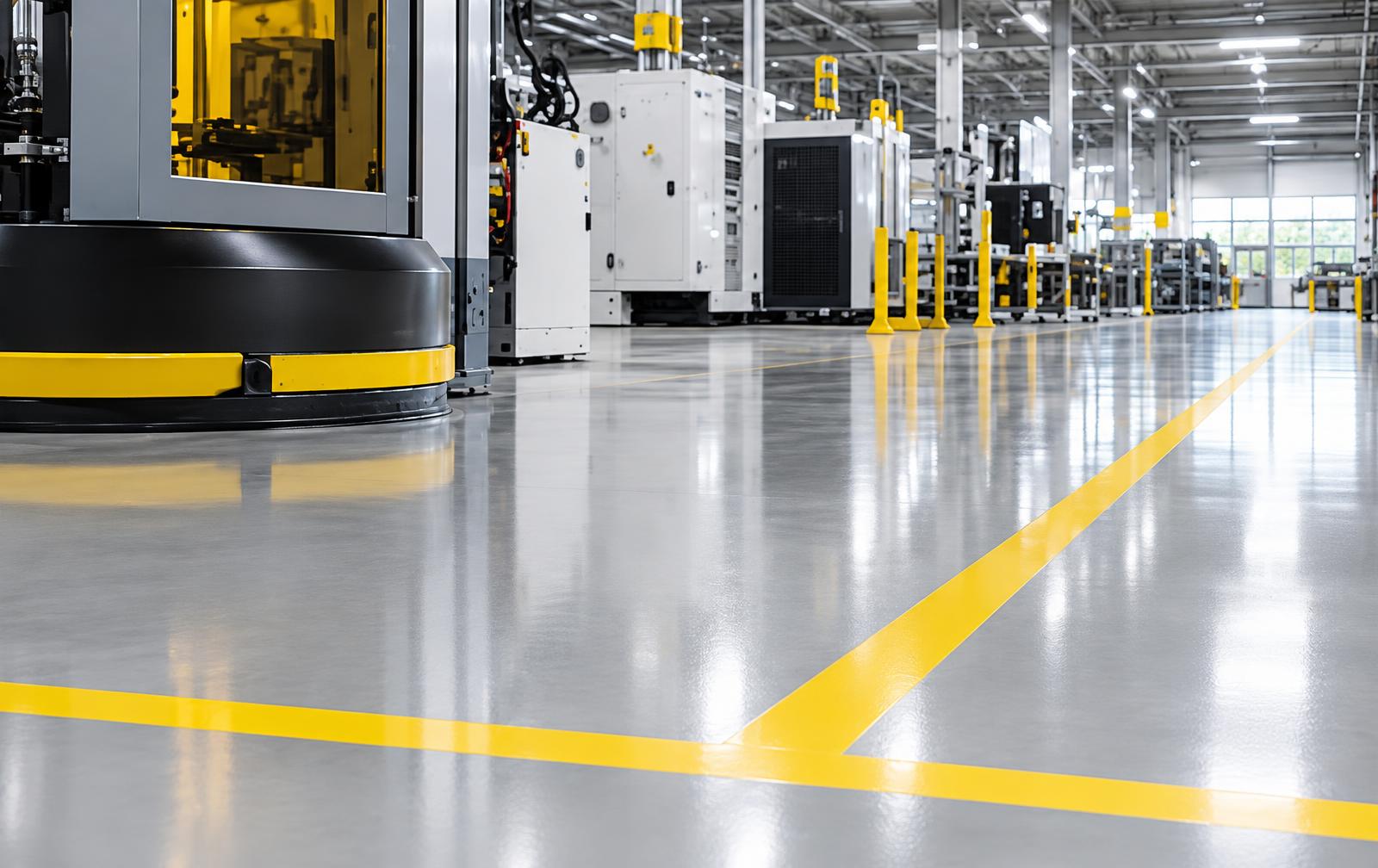
Industrial Epoxy Flooring in Chattanooga, TN
Heavy-build resin systems for manufacturing plants, chemical exposure and forklift traffic.
Planning industrial epoxy flooring in Chattanooga
Industrial environments ask more of a floor: steel-wheeled carts, forklifts, dropped tools, oils, coolants and aggressive cleaning. Industrial epoxy systems are typically applied thicker than commercial coatings and are selected around specific abrasion, impact and chemical exposures.
Choosing the right system starts with an honest list of what touches the floor. A contractor should be able to match your exposures to a manufacturer's published chemical-resistance chart rather than relying on generic claims.
A Chattanooga production facility should list oils, coolants, cleaning chemicals and traffic by work zone before requesting a system specification. Machine areas, assembly aisles and maintenance bays may need different builds. Plan equipment access and shutdown windows first; ask for product-specific chemical-resistance documentation rather than a generic heavy-duty promise.
Common applications
- Production lines and assembly areas
- Machine shops
- Battery charging rooms
- Chemical storage and containment
- Maintenance bays
Facilities and environments
- Manufacturing plants
- Fabrication shops
- Processing facilities
- Utility and power facilities
System options
High-build 100% solids epoxy
Thicker films for abrasion and impact resistance.
Epoxy mortar / trowel-applied
For heavy impact zones and slab levelling.
Novolac epoxy
Selected where stronger acids or solvents are present.
Line striping and safety markings
Aisle, hazard and pedestrian walkway marking.
Surface preparation
- Shot blasting or diamond grinding to a specified concrete surface profile
- Degreasing oil-contaminated concrete
- Joint and crack treatment
- Moisture vapour testing; mitigation primers if needed
Installation and downtime
- Production downtime planning is usually the biggest scheduling factor
- Weekend or shutdown-window installation is common
- Return-to-service time depends on product and conditions
What affects cost?
- Chemical and thermal exposure requirements
- Film thickness
- Slab contamination and repair
- Downtime constraints
- Containment curbs, coves and trenches
Maintenance and service life
- Clean spills promptly, even on chemical-resistant systems
- Inspect high-wear aisles annually
- Recoat or repair damaged sections before they spread
Frequently asked questions
How thick should an industrial epoxy floor be?
It depends on traffic and exposure. Thin coatings, high-build coatings and trowelled mortars serve very different loads — ask contractors to specify thickness in writing.
Does epoxy resist all chemicals?
No. Resistance varies by product and chemical. Request the manufacturer's chemical-resistance data for your specific exposures.
Can you coat over an oil-soaked slab?
Sometimes, after degreasing and testing. Severe contamination may require more aggressive preparation.
Related flooring services
Warehouse Floor Coatings
Coatings, sealers and line striping for distribution centres and high-bay storage.
Chattanooga, TN
Industrial Floor Sealing
Densifiers and penetrating sealers to dust-proof and protect large concrete slabs.
Chattanooga, TN
Concrete Floor Resurfacing
Repair, level and renew worn, spalled or uneven commercial slabs.
Chattanooga, TN
Flooring for your commercial environment
Ready to plan your flooring project?
Tell us about your facility. Requesting a quote is free.
We are an independent contractor referral platform, not a flooring installation company. Learn more