Planning warehouse & industrial coatings in Chattanooga
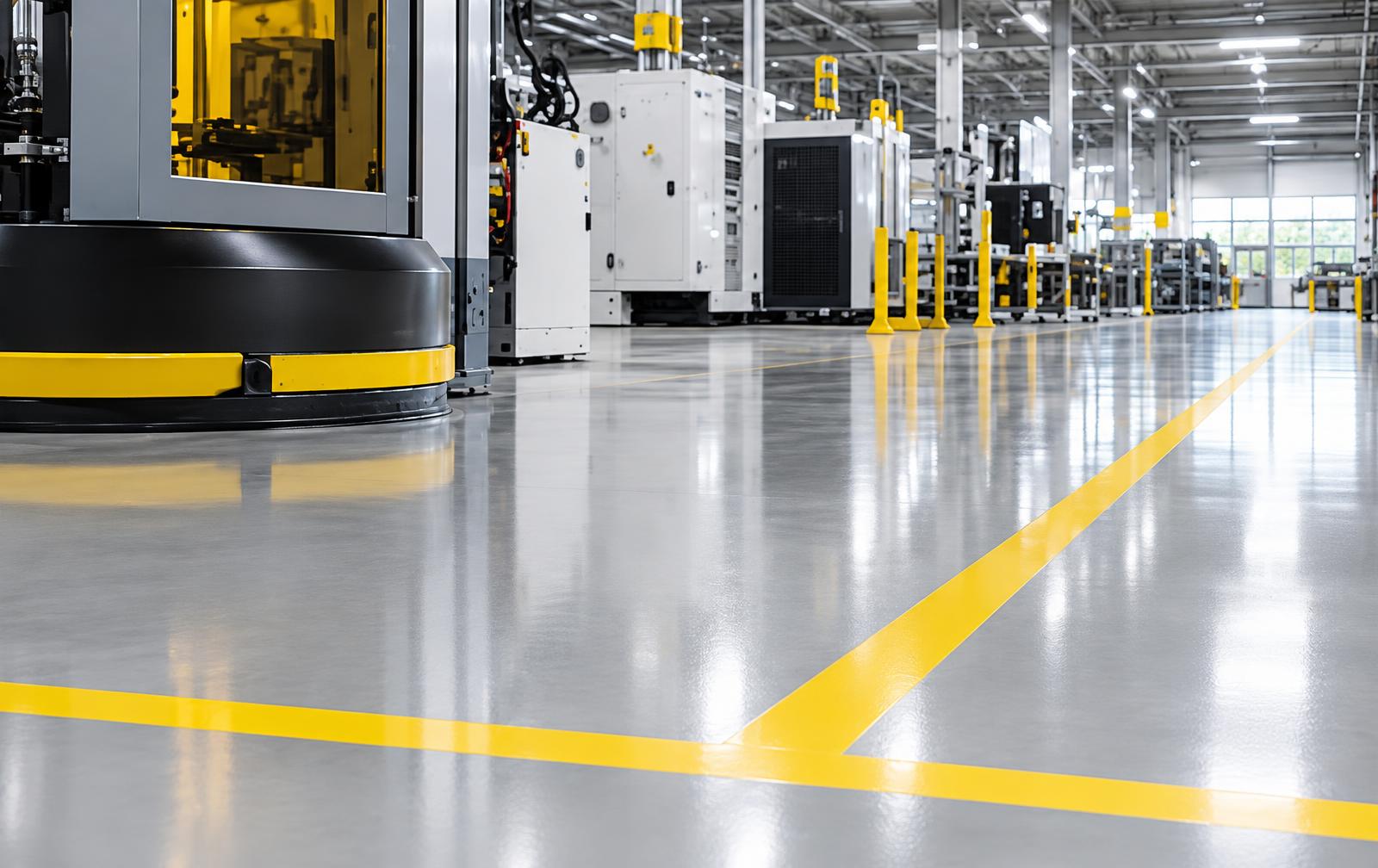
Forklift turning lanes, dock approaches and production stations are different flooring problems. For a Chattanooga warehouse or manufacturing renovation, first map vehicle routes, rack areas, staging zones and pedestrian crossings. A thin decorative coating should not be treated as a heavy-impact system.
“Forklift-rated” is not a universal approval for any epoxy floor. Ask for the proposed build thickness, abrasion and impact data, substrate requirements and suitability for your truck loads, wheel types and turning frequency. The structural slab carries the load; a coating cannot repair an under-designed or unstable slab.
Not every square foot needs a full coating. Sealing or densifying open storage areas and coating targeted spill-prone zones may be worth comparing. Battery charging areas, machine-fluid exposure and containment details can need different products from general warehouse aisles.
System options to compare
High-build epoxy and mortar systems
Compare documented builds for abrasion and impact at dock approaches, production zones and repeated turning points. Thickness and substrate preparation matter as much as chemistry.
Chemical-specific coatings
Assess acids, coolants or battery-related exposures against manufacturer data. A general-purpose floor is not automatically a containment system.
Densifiers, sealers and traffic markings
Consider dust control in storage zones and specified striping at crossings. Define compatibility with the slab finish, scrubbers and future recoating.
What to put in the specification
- Record loaded vehicle weights, wheel types, turning points and dropped-load risks.
- Survey spalled joints, cracks, slab movement, moisture and existing contamination.
- Require written thickness, preparation profile and product performance data.
- Separate pedestrian routes, charging zones and containment details from general storage.
Installation and operational downtime
- Phase work around receiving, shipping and inventory movement rather than assuming the entire building will close.
- Allow separate windows for joint repair, surface preparation, coatings and striping.
- Get written forklift release times; light foot-traffic cure does not establish heavy-traffic readiness.
What affects project cost?
- Coated area versus sealed area
- Joint and spall repair quantities
- Film build and exposure-specific products
- Rack access and inventory relocation
- Phasing, shutdown work and striping
Maintenance after installation
Remove grit from traffic lanes, use compatible scrubber pads and detergents, and inspect joints and turning zones regularly. Repair localized damage before wheel traffic enlarges it.
Frequently asked questions
Does forklift traffic require a thicker floor coating?
Often a more robust build is worth evaluating, but wheel type, load, turning frequency, slab condition and product data decide the specification. There is no single thickness suitable for every warehouse.
Can we keep shipping during installation?
Possibly, with isolated work zones and agreed routing. The plan must account for dust, access, inventory movement and curing before vehicles return.
Do we need to coat every storage aisle?
Not necessarily. Compare targeted coating with densifying or sealing after the slab and actual exposures have been assessed.
Standards and planning references
References explain planning considerations; they do not certify a product or establish compliance for a particular facility.