
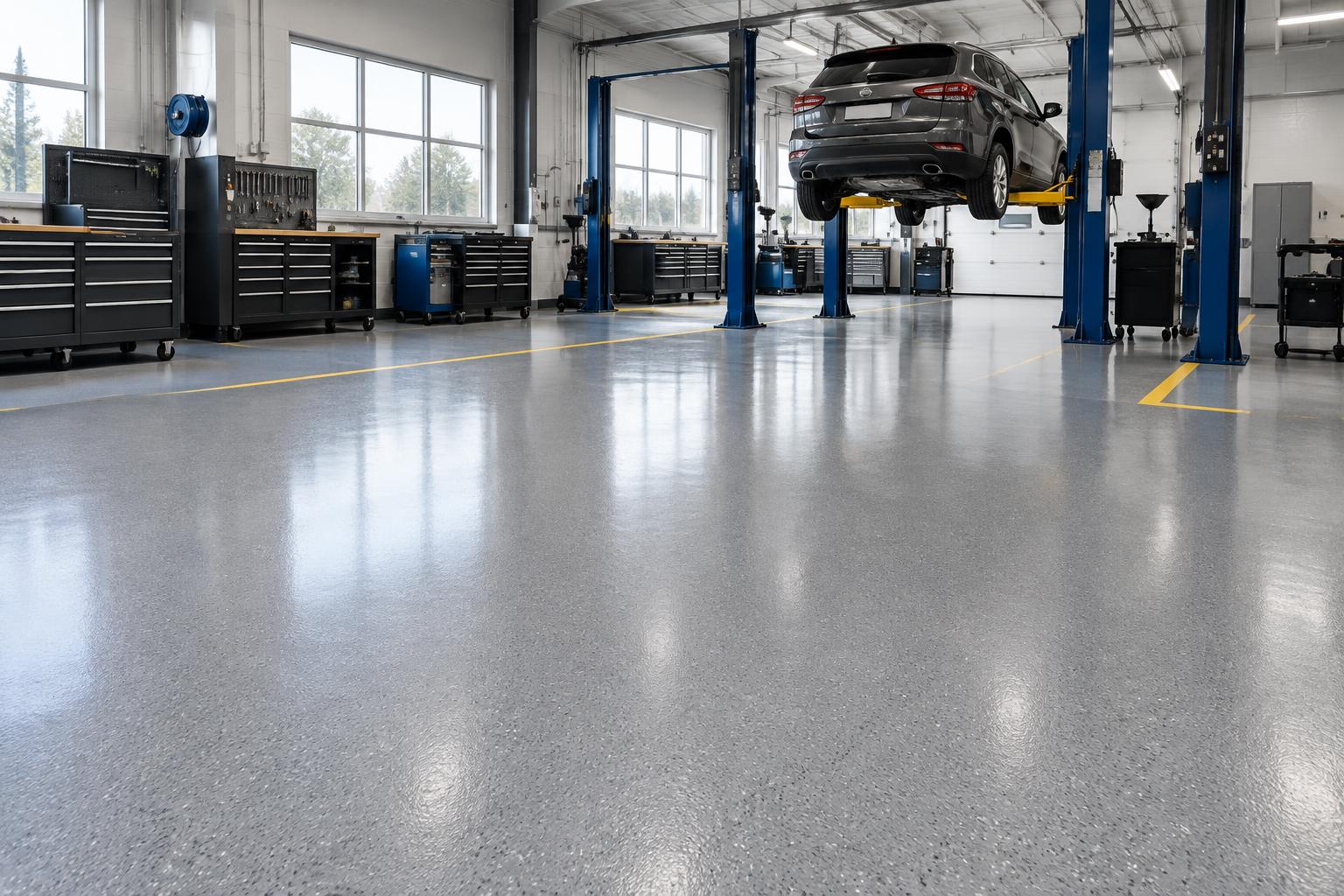
Planning auto shop & garage epoxy in Chattanooga
An automotive floor must handle more than parked cars. Rolling tool chests, jack stands, turning tires and fluid spills put concentrated demands on a coating. For a Chattanooga service shop, separate repair bays from the customer reception or showroom so appearance does not drive the whole specification.
Oil-resistant does not mean resistant to every shop fluid. Provide the proposed installer with oils, brake fluids, fuels, coolants, degreasers and solvents used onsite. Ask for the manufacturer’s resistance chart at the relevant concentration, temperature and exposure duration, including cleanup requirements.
Older service-bay concrete may contain oil below the visible surface. Degreasing, mechanical preparation and adhesion assessment are essential; covering contamination can lead to bond failure. Lift anchors, moving joints and damaged bay entrances also need individual detailing before coating.
System options to compare
Solid-color epoxy with a specified topcoat
A practical candidate for service bays when supported by exposure and wear data. Discuss tire traffic, abrasion, gloss and the maintenance program.
Flake-broadcast resin
A candidate for reception and display areas, or suitable service zones. Review an actual texture sample and how small hardware will remain visible.
Heavy-build systems at concentrated wear zones
Compare stronger builds where tools or traffic repeatedly impact the floor. Protect against concentrated jack-stand loads according to the system specification.
What to put in the specification
- List all shop fluids and cleaners; request chemical-specific resistance documentation.
- Assess oil penetration, moisture, existing coating adhesion and entrance wear.
- Specify lift-base detailing and honor moving joints; do not alter structural anchors without qualified review.
- Request tire-traffic suitability, texture and abrasion data for the exact coating build.
Installation and operational downtime
- Plan bay-by-bay work only where dust control and safe vehicle routing can be maintained.
- Move tools and equipment before preparation, allowing extra time for oil remediation or repairs.
- Confirm separate release times for walking, rolling equipment, vehicles and chemical exposure.
What affects project cost?
- Depth and extent of oil contamination
- Failed coating removal and slab repairs
- System thickness and topcoat selection
- Bay striping and equipment details
- Vehicle relocation and off-hours scheduling
Maintenance after installation
Clean spills within the manufacturer’s specified exposure limits, keep grit out of tire-turning zones and use approved detergents. Protect concentrated loads and inspect damaged edges near lifts and bay doors.
Frequently asked questions
Can epoxy go over an oil-stained garage floor?
Only after the contamination has been assessed and suitable preparation verified. Deep contamination can require additional remediation; stain coverage is not proof of adhesion.
Will any epoxy resist brake fluid and gasoline?
No. Performance varies by formulation and exposure. Verify those exact chemicals in the manufacturer’s chart before selecting a system.
Is a one-day installation always possible?
No. Preparation, repairs, site conditions and the selected product determine the schedule. Coating completion is different from permission to return vehicles or chemicals to the floor.
Standards and planning references
References explain planning considerations; they do not certify a product or establish compliance for a particular facility.