
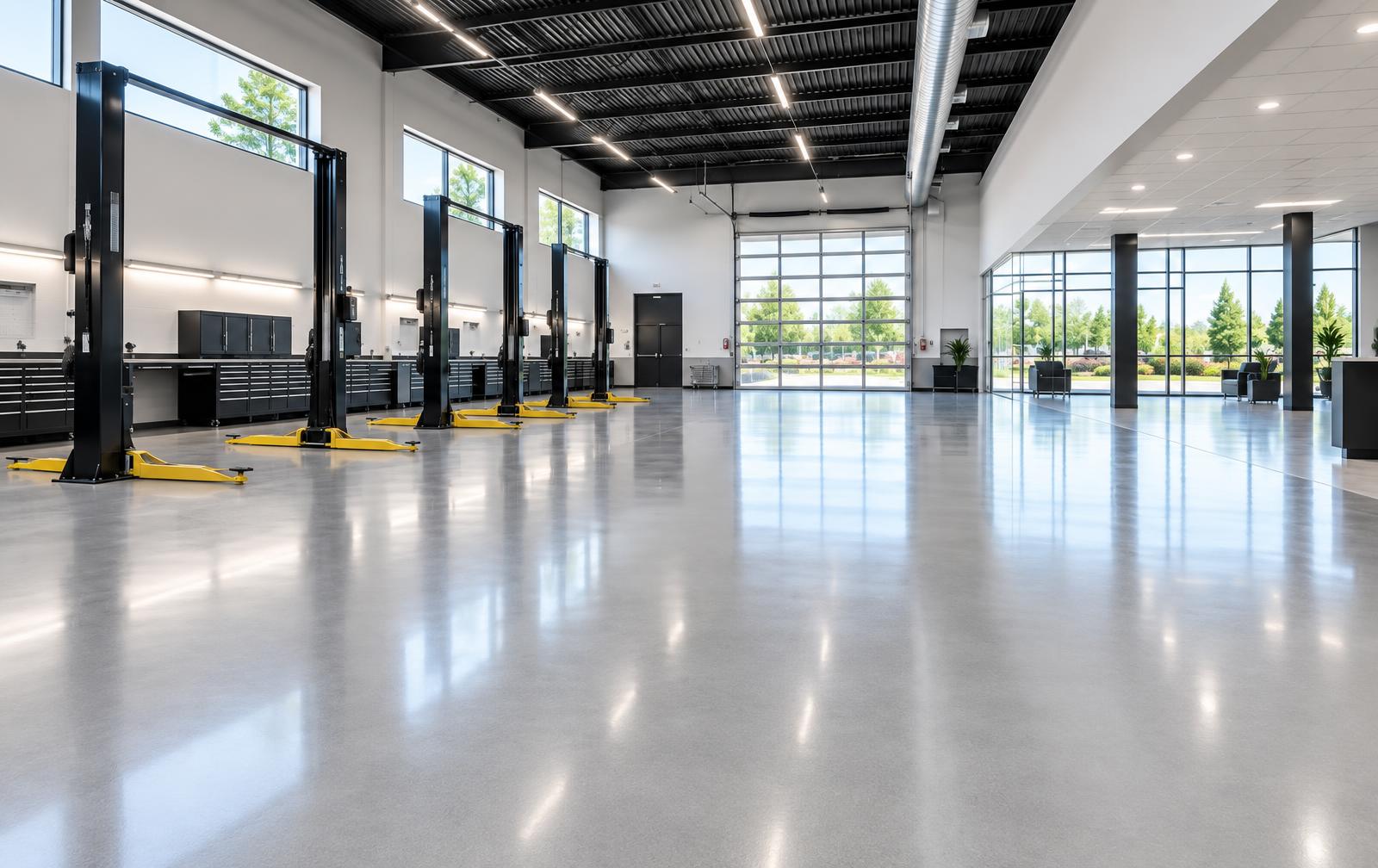
Planning retail & showroom epoxy flooring in Chattanooga
A showroom floor is part of the customer experience, but daily maintenance determines whether it keeps its appearance. For Chattanooga retail spaces, assess entrances, display routes, checkout queues and sunlit storefront zones separately. Rolling fixtures and deliveries can wear a finish differently from foot traffic.
Compare solid color, flake and decorative finishes with actual samples under your lighting. Highly reflective finishes can reveal scratches or glare; added texture can change the cleaning effort. A visual sample should accompany the written wear and traction specification.
Do not assume all epoxy tolerates storefront sunlight equally. Review the complete resin-and-topcoat system for UV exposure and color stability. Entry mats, prompt spill cleanup and a compatible cleaning routine remain necessary even when a textured coating is used.
System options to compare
Solid-color epoxy with protective topcoat
Compare color, gloss and documented wear performance for sales floors and reception areas. Specify a compatible topcoat for the actual light exposure.
Decorative flake systems
Evaluate a consistent sample for texture, color blend and ease of cleaning around displays. Appearance alone does not establish wet-floor traction.
Polyaspartic or other exposure-suited finishes
Compare documented UV behavior and cure requirements with epoxy options. Faster cure does not remove preparation or moisture-testing requirements.
What to put in the specification
- Map wet entrances, sunlight, rolling fixtures and delivery paths.
- Test slab moisture and assess old adhesives, cracks and existing coatings.
- Review finish samples under store lighting, including gloss and cleaning effort.
- Specify protection for fixture feet and wheels, plus a written maintenance plan.
Installation and operational downtime
- Compare planned closures with staged work zones and safe customer routes.
- Protect stock and displays during preparation and confirm ventilation needs.
- Get release times for foot traffic and loaded fixtures; do not reopen solely because the surface looks dry.
What affects project cost?
- Removal of old flooring and adhesives
- Concrete repairs and moisture mitigation
- Decorative finish and topcoat choices
- Display relocation and stock protection
- Phasing and evening or weekend work
Maintenance after installation
Use compatible cleaners and soft or approved scrubber pads, maintain entry mats and protect display feet. Plan inspection and topcoat refresh around actual wear rather than a promised universal lifespan.
Frequently asked questions
Which finish is best for a sunlit showroom?
Compare the manufacturer’s UV and color-stability information for the complete system. Do not choose from the resin name or gloss level alone.
Can a store remain open while its floor is coated?
Sometimes, if access, dust, ventilation and cure zones can be safely separated. A contractor must assess whether staged installation is realistic.
Does a decorative finish hide every slab defect?
No. Cracks, movement and uneven concrete require preparation and repair. A decorative finish cannot stabilize the underlying slab.
Standards and planning references
References explain planning considerations; they do not certify a product or establish compliance for a particular facility.